Trust has a lifecycle
Aug 18, 2026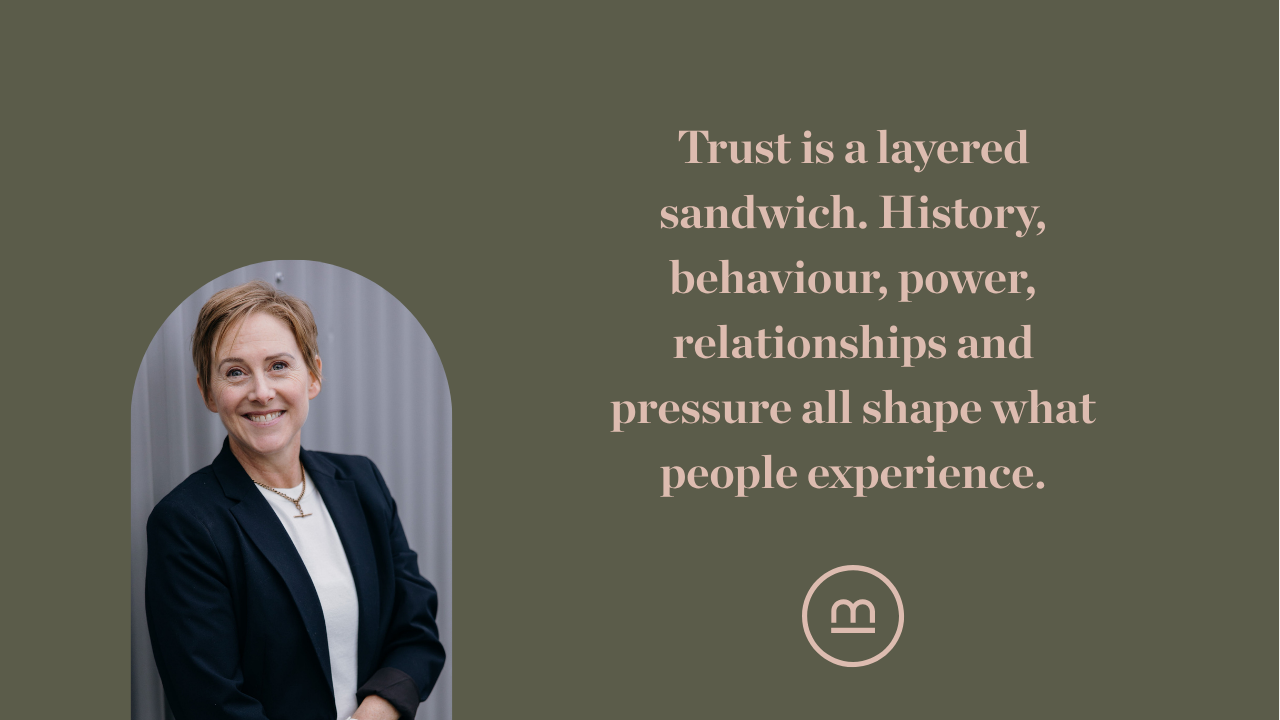
Yesterday, I covered a large section of my home office windows with sticky notes. From a distance, it probably looked like a stationery shop had exploded in the room. Up close, I was trying to map what happens to trust over the life of a project and find the holes in my thinking. It is messy, layered, nuanced and all those beautiful words. I doubt it will ever be a cookie-cutter, lift-and-shift, same-same model for every project. This would make some people want to pull their hair out. It makes me lean in and keep asking why.
I have been digging into what project teams usually mean when they say they are going to “build trust”. The answer generally includes stakeholder mapping, good communication, consultation, transparency, opportunities for feedback and following through on commitments. Those practices create an important foundation. The deeper question is how trust develops, changes and survives within the complex human and organisational environment surrounding a project.
The more I have worked through the research over the past 12 months, the clearer it has become that trust has a lifecycle.
Building the first version of the Trust Lifecycle.
Trust begins before the project does
Every project inherits a relationship environment. Organisational history, previous promises, established relationships, political dynamics and community experiences are already influencing how people see the project and those delivering it. I have talked about this before, and it resonated with many of you. Joining a project can feel like walking into unfamiliar territory dotted with landmines no one thought to mark on the map.
That inherited environment shapes how people interpret the project’s first communication, how much benefit of the doubt they are prepared to give and whether an invitation to participate feels genuine. Before the first workshop has been held, the project may already be working with strong relational capital, deep suspicion or something in between.
Trust continues to change as people experience the project. Predictable communication, honest treatment of uncertainty and follow-through on commitments create evidence people can use to judge the project’s trustworthiness. Timelines slipping, project personnel changing, budgets tightening and politically difficult decisions can all put that judgement under pressure.
Sometimes trust strengthens through those moments. Sometimes it weakens or becomes brittle. A particularly difficult stage emerges when the project team needs to repair a relationship while continuing to make decisions and keep delivery moving.
Project closure also deserves much more attention. Communities, stakeholders and organisations remember whether commitments were honoured, how the team left and whether the relationship was treated as valuable in its own right. The next project inherits that relational legacy.
Taken together, these stages are forming the Trust Lifecycle: the conditions inherited before engagement begins, the way relationships are entered, the repeated experiences that create credibility, the moments when trust is tested, the work of repair and what remains after project close.
Where the Conditions of Trust Network fits
The Trust Lifecycle will sit within the Conditions of Trust Network, which I am building for people managing trust, stakeholder relationships across the influence spectrum and stakeholder risk within complex public and infrastructure projects.
The current model integrates communication and engagement practice, behavioural science and relationship strategy. It considers how people interpret risk, fairness and uncertainty, alongside how relationships are entered, maintained, repaired and carried beyond individual project milestones. Bringing these disciplines together provides a fuller view of the human conditions influencing project delivery.
The network will give project managers, engineers, scientists, communication and engagement professionals, and relationship managers a private, practical place to bring real cases. Members will be able to examine what is happening underneath the formal process, draw on the experience of people working in similar environments and make more informed decisions about their next move.
Confidential case discussions will support live problem-solving. Practical tools and frameworks will help members apply the Trust Lifecycle within their own projects. Digital courses and decision-support resources will provide a shared foundation for people coming to the work from different professional disciplines.
The value lies in helping members think and act when a live project becomes complicated, especially when the engagement plan no longer provides enough guidance for the human and relational issues emerging around it.
The next stage of building
I had said I wanted to begin opening the network this week. The research is well under way, the first architecture exists and the Trust Lifecycle is taking shape. The build has now reached a useful validation point, where five focused conversations can help strengthen the membership structure, participation model and founding offer before they are finalised.
Over the next ten days, I want to speak with a mix of people who:
- Lead communication, engagement, stakeholder or project delivery work
• Work in local government, infrastructure or another complex public-project environment
• Could use the network themselves, recommend it internally or be involved in approving a membership
• Have experienced a situation where trust or stakeholder relationships created genuine delivery risk
During each 30-minute conversation, I will ask about a current or recent project, the point where the standard engagement approach stopped being enough and the support available at that stage. I also want to understand what would make confidential cross-organisation case discussions useful, what people would need to participate honestly and where responsibility for this type of membership would sit internally.
I will then share the current design and the two membership pathways I am testing. For organisations enrolling multiple staff, the proposed group rate is NZ$2,250 plus GST per participating person, per year. The individual membership is NZ$4,500 plus GST per year and includes quarterly one-on-one advisory with me, as well as access to the peer network, digital courses and decision-support resources.
At the end of the conversation, I will ask whether either option is relevant to your work and whether you would want to be considered for the founding cohort. I am particularly interested in testing whether the distinction between the options is clear, who an organisation would enrol and what would be required to approve the investment.
I need five people prepared to give me a frank assessment of where the model fits, where it needs strengthening and what would make it genuinely useful in the middle of complex project work.
If that sounds like your world, hit reply and tell me your role and, in one or two sentences, where trust or stakeholder relationships become most difficult in your work. I will come back to you personally to arrange a time.
The Conditions of Trust Network is taking shape. These conversations will help ensure the version I open reflects the work people are doing, the risks they are carrying and the support they need when a project becomes difficult.